
Amazon has spent decades building one of the world's most sophisticated fulfillment networks to make buying on Amazon faster and easier.
Now it increasingly wants that infrastructure to power commerce outside Amazon as well.
On September 24, Amazon announced that U.S. merchants using Amazon Multichannel Fulfillment (MCF) can offer fast, free Prime delivery directly on their own websites. The company also introduced preferred MCF pricing that can reduce fulfillment fees by 15–25% for the first six months for eligible merchants.
Amazon is extending Prime delivery beyond the Amazon marketplace and into merchants' own ecommerce channels.
This is more than another fulfillment update.
It is part of a broader shift in Amazon's role, from being primarily a marketplace where merchants sell to becoming infrastructure that merchants can use wherever they sell.
One inventory pool. Multiple storefronts.
The traditional multichannel model creates fragmentation almost by default.
An Amazon seller may hold inventory in FBA. Shopify orders may run through a separate 3PL. Walmart may use WFS or another fulfillment arrangement. TikTok Shop and additional marketplaces add still more inventory, order and fulfillment workflows.
The commercial logic behind MCF is different: inventory already positioned within Amazon's fulfillment network can be used to fulfill orders originating elsewhere.
Amazon's own data makes the operational case interesting. According to the company, sellers using both FBA and MCF from a single inventory pool have experienced, on average:
19% fewer out-of-stocks 12% improvement in inventory turnover
Amazon also says merchants adding MCF to their off-Amazon channels have reported an average 18%+ increase in sales or revenue.
Those figures are Amazon-reported rather than independent benchmarks, but they illustrate why inventory pooling is becoming strategically relevant.
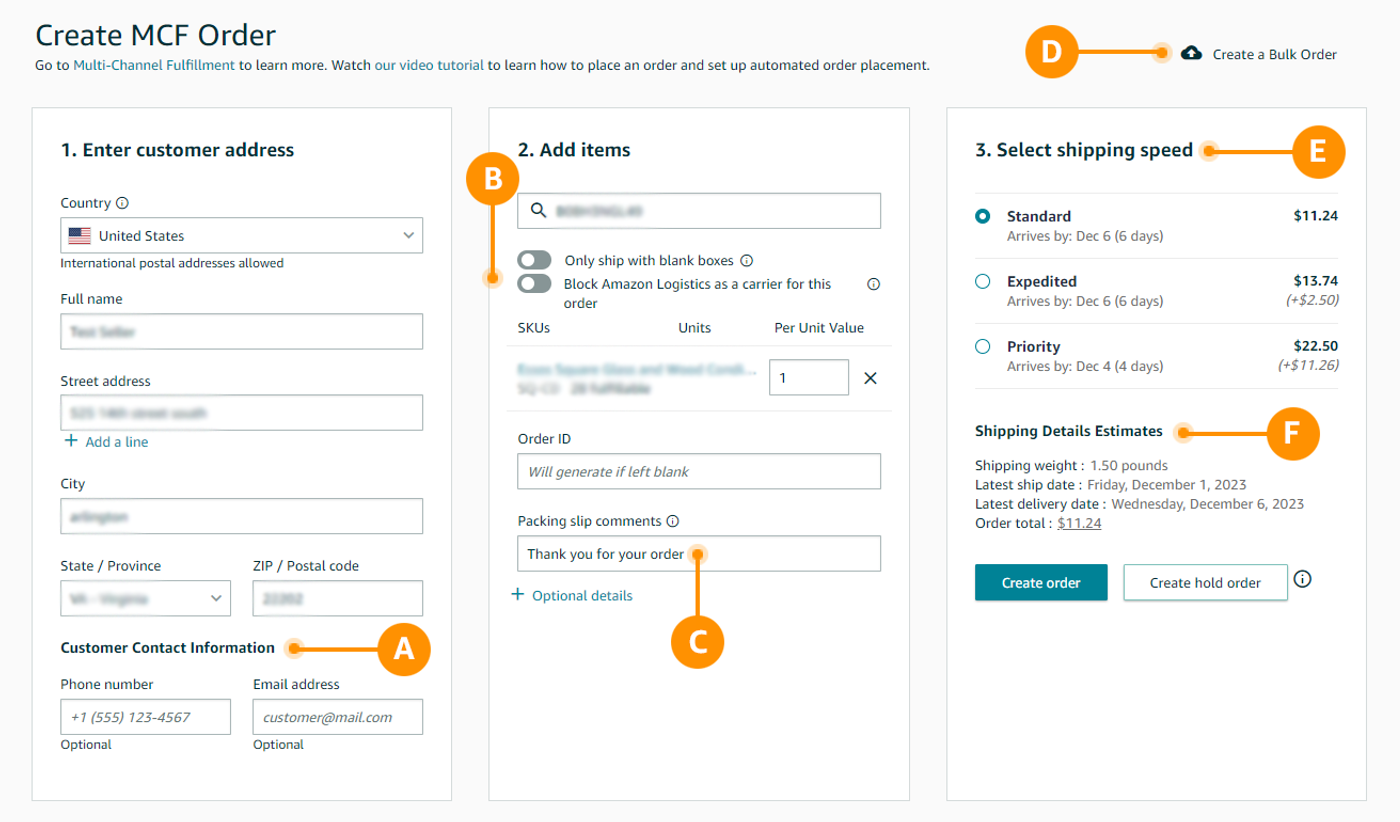
Amazon MCF can fulfill orders originating from a merchant's own website, marketplaces and other sales channels from inventory held within Amazon's network.
The bigger move is happening inside Seller Central
Amazon's direction becomes clearer when fulfillment is viewed alongside its latest multichannel seller tools.
Amazon is introducing capabilities that allow merchants to manage activity across Amazon, eBay, Shopify, TikTok Shop and Walmart through Seller Central, including multichannel listings, orders and profitability information.
Put the two developments together and the strategy becomes more significant.
Amazon can increasingly help a merchant:
store the inventory → list products across channels → receive multichannel orders → fulfill those orders → track performance
without requiring the sale itself to happen on Amazon.com.
That begins to reposition Seller Central from a marketplace-management environment toward something closer to a multichannel commerce operating layer.
Why this matters for ecommerce operators
For sellers, the attraction is obvious.
Pooling inventory can reduce duplication across fulfillment networks. Better utilization can release working capital. Fewer stockouts can protect sales. A common fulfillment layer can make expansion into another channel operationally easier.
But consolidation introduces another consideration: dependency.
A brand may diversify its revenue across Amazon, Shopify, Walmart and TikTok while simultaneously concentrating more of its inventory, fulfillment and operational infrastructure inside Amazon.
Commercial diversification and operational diversification are not necessarily the same thing.
That distinction matters.
A business evaluating this model needs to look beyond the fulfillment rate and ask what happens to inventory control, channel economics, working capital, service levels and operational resilience when more channels begin relying on the same infrastructure.
The real opportunity is inventory productivity
The most important part of this shift may therefore have little to do with delivery speed.
Inventory is one of the largest uses of working capital in an ecommerce business. When stock is divided unnecessarily between channels, each inventory pool needs enough depth to absorb its own demand variability.
That can leave one channel out of stock while another sits on excess inventory.
A genuinely shared inventory model can change that equation.
Instead of asking:
How much inventory should we allocate to Amazon? How much should sit with our Shopify 3PL? How much should we reserve for Walmart?
the business can increasingly ask:
How much inventory do we need to support total demand across the business?
That is a fundamentally better inventory question.
FROM CHANNEL-SPECIFIC INVENTORY
Amazon → FBA Shopify → 3PL Walmart → WFS TikTok Shop → Fulfillment Partner
TO SHARED COMMERCE INFRASTRUCTURE
Amazon + Shopify + Walmart + TikTok Shop ↓ SHARED INVENTORY & FULFILLMENT LAYER ↓ Orders fulfilled across channels
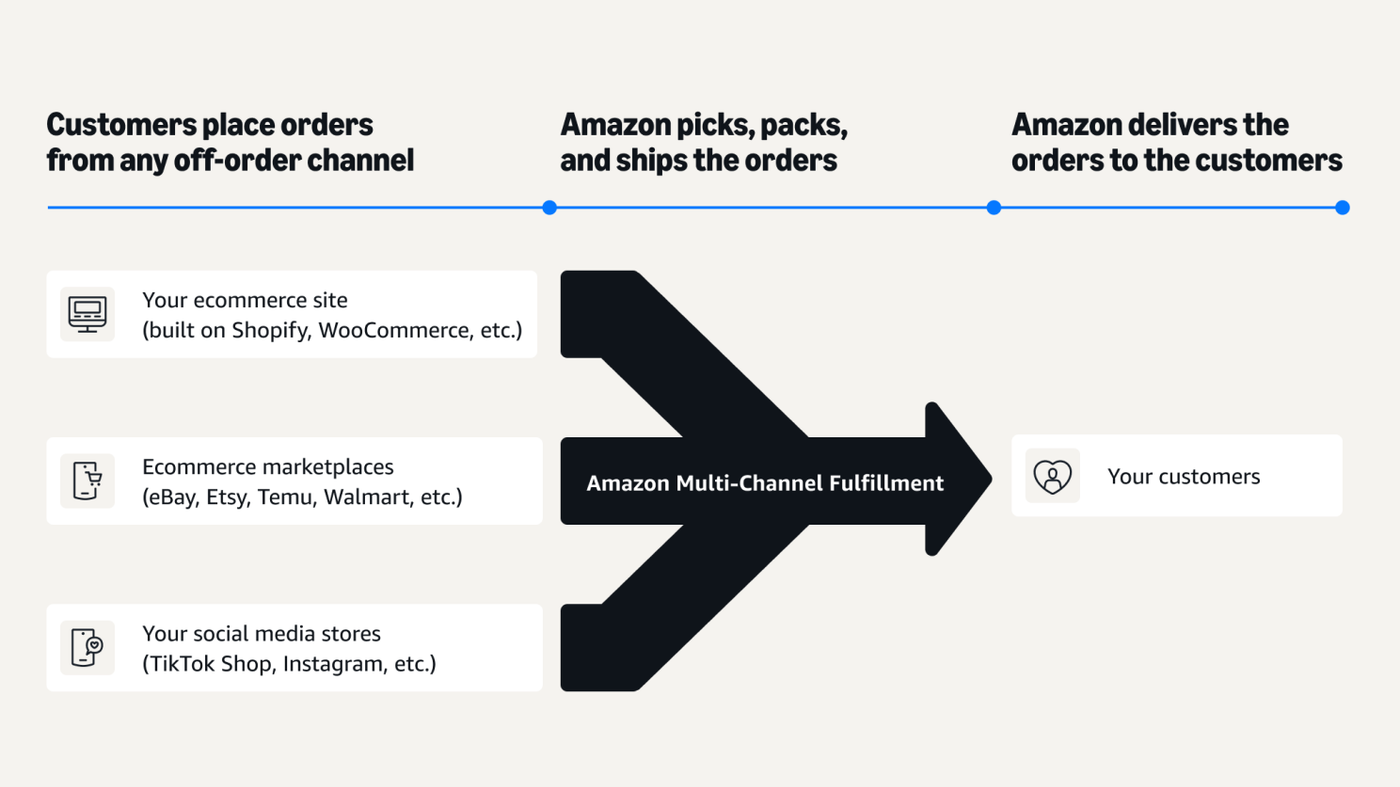
The strategic shift is from managing inventory around individual storefronts toward managing inventory around total demand.
Fulfillment consolidation does not remove the need for financial visibility
In fact, it makes it more important.
One inventory pool may serve several channels, but every channel still has different acquisition costs, marketplace fees, pricing, returns, promotions and contribution margins.
The physical unit may come from the same shelf.
The economics of the sale do not.
That means businesses adopting multichannel fulfillment need to preserve clear SKU- and channel-level financial visibility even as the physical operation becomes more consolidated.
This is where the operational model and the financial model need to meet.
CMPulse and CM Vista are designed around that requirement, connecting inventory, channel activity and financial performance so management can see not only where inventory is moving, but where that movement is actually creating profitable growth.
Amazon moving beyond Amazon is significant.
But for ecommerce businesses, the larger opportunity is not simply having Amazon fulfill more orders.
It is building an operation where inventory can move across channels without financial visibility becoming fragmented with it.