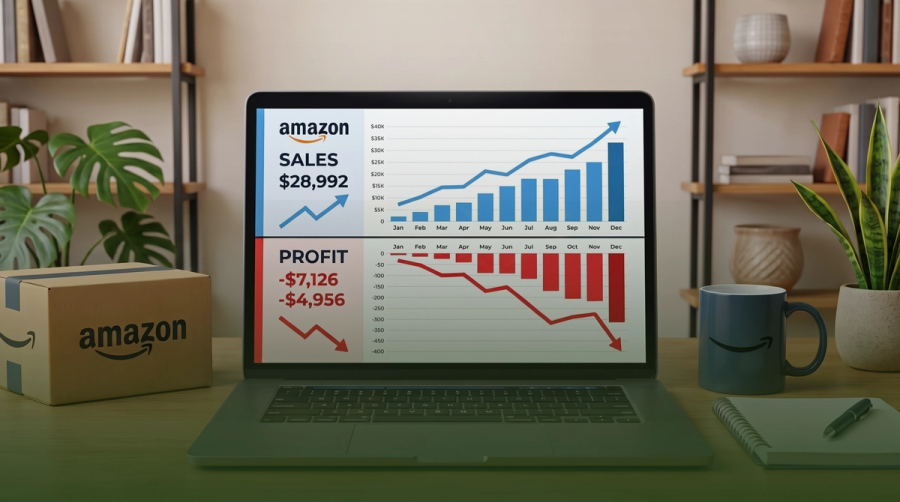
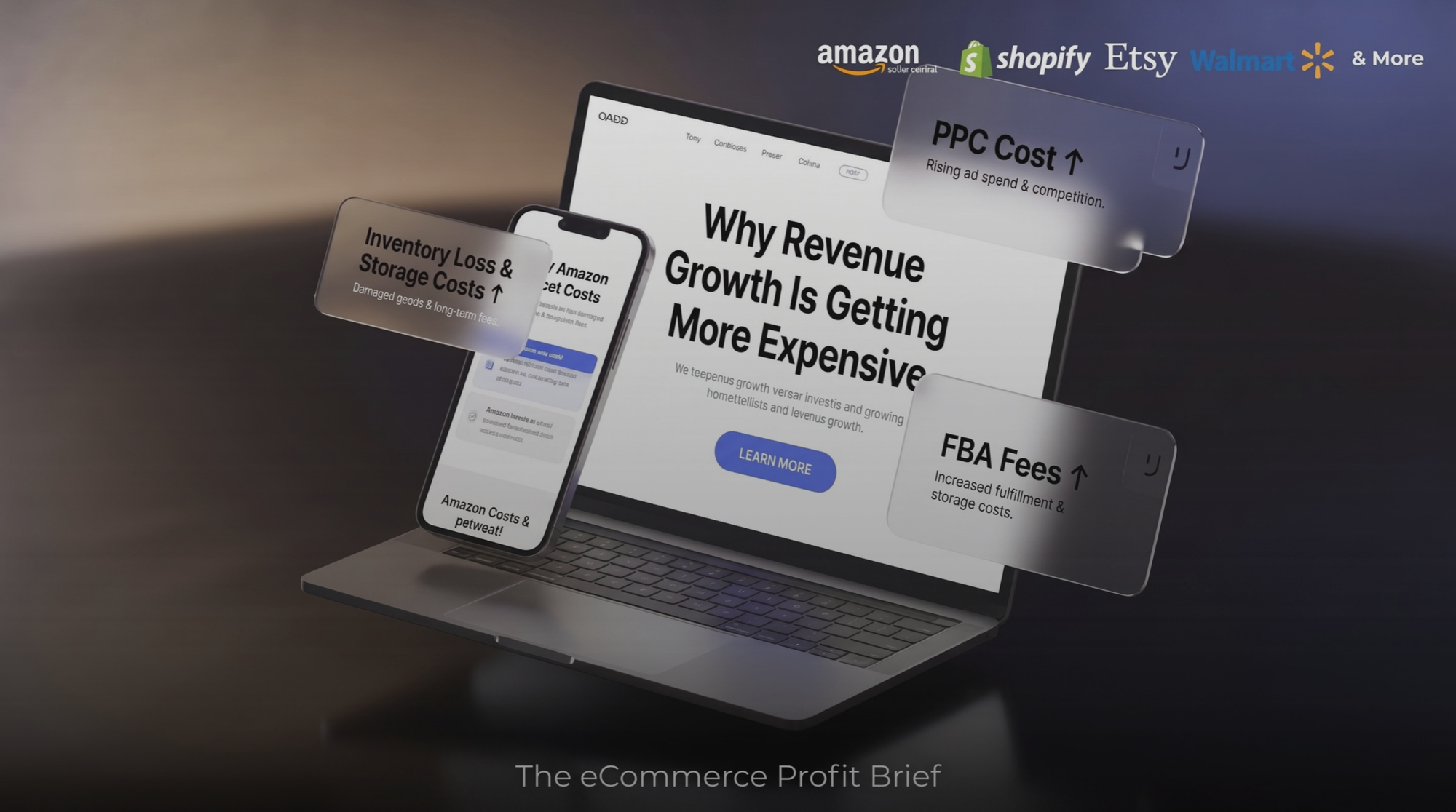
E-Commerce is still growing aggressively. The economics of capturing that growth, however, are changing quickly.
The developments across Amazon and Shopify over the past few months point to a market where sellers are being asked to compete across more layers of cost, technology and customer acquisition than before. The important question is no longer simply whether a channel can generate more sales. It is whether the additional sales remain economically attractive after all of the new variables are accounted for.
Amazon: advertising is under a new level of scrutiny
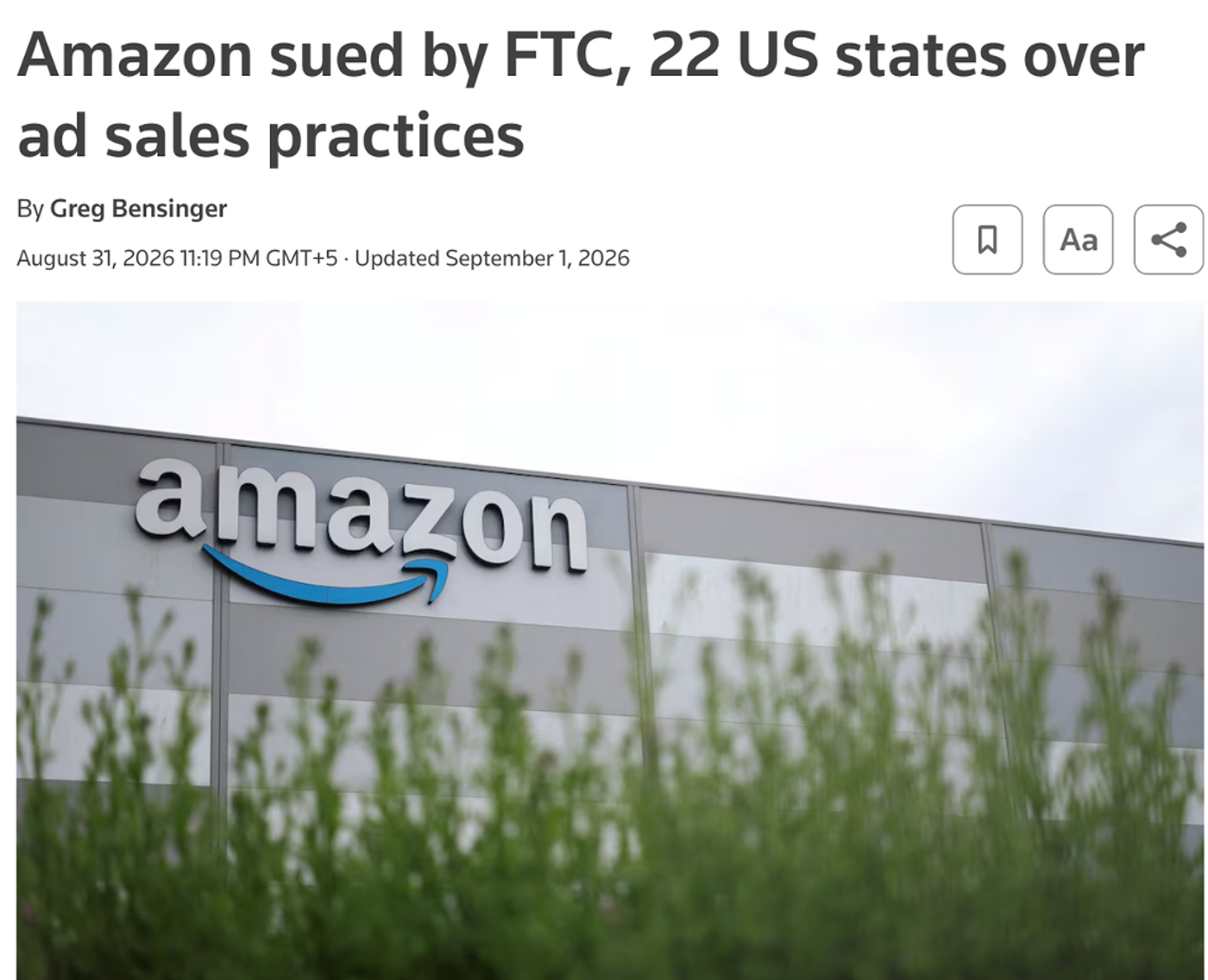
On August 31, the U.S. Federal Trade Commission and 22 states sued Amazon, alleging that the company manipulated aspects of its advertising auctions and caused advertisers to pay more than $20 billion since 2019. Amazon disputes the allegations and says its advertising technology has reduced costs for advertisers.
Regardless of how the case develops, the scale of the dispute is significant. Amazon's advertising business generated $68.6 billion in 2025 and has become an integral part of how sellers compete for visibility on the marketplace.
For sellers, this makes advertising economics increasingly difficult to separate from product economics. A product that requires rising paid visibility to maintain its sales position cannot be evaluated on revenue and ROAS alone. The relevant measure is what remains after advertising, fulfillment, marketplace fees, returns and product cost.
That is a very different calculation from asking whether an advertising campaign is “performing.”
Faster delivery is becoming another commercial decision
Amazon is also testing a new model for Sub-Same Day delivery in which some FBA sellers can bid for access to faster delivery. Amazon says participating products have seen an average 12% increase in sales.
That sounds like an obvious opportunity until the economics are examined more closely.
Faster delivery requires inventory to be positioned closer to customers, and the seller pays for units shipped through the faster service. The decision therefore involves more than conversion rate. It involves inventory positioning, fulfillment cost and the contribution generated by the incremental sales.
This is becoming a recurring pattern on Amazon: an operational decision increasingly carries a financial consequence.
Shopify is moving commerce into AI-driven discovery
The shift is not limited to marketplaces.
Shopify's 2026 product strategy is increasingly built around AI-driven commerce. Its Catalog and Universal Commerce Protocol are designed to make merchant products discoverable across AI shopping experiences, while Shopify has expanded integrations around ChatGPT, Google and other AI surfaces.
The significance is larger than another new acquisition channel.
If customers increasingly discover and compare products through AI agents rather than traditional search, brands will have to understand a new form of commerce in which product data, pricing, availability, catalog structure and fulfillment information all influence whether a product can be discovered and purchased.
Shopify reported 32% GMV growth in its latest quarter, reaching $115.6 billion, while AI-generated traffic and orders to merchants tripled year over year.
The opportunity is substantial. So is the complexity.
The common problem is not platform choice
Amazon and Shopify are moving in different directions, but they are creating a similar management challenge.
Amazon sellers increasingly have to evaluate advertising, fulfillment, inventory positioning and marketplace economics together.
Shopify merchants are dealing with acquisition costs, increasingly fragmented discovery, AI-driven traffic, customer retention and multi-channel attribution.
In both cases, the business can generate more revenue while making decisions that weaken the economics underneath it.
That is why the next competitive advantage in ecommerce will not simply be access to another sales channel.
It will be the ability to understand the financial consequence of every channel and operational decision.
A seller needs to know which products generate contribution, which advertising actually creates profitable demand, where inventory is consuming capital, and how changes in fulfillment or customer acquisition affect the final return.
That requires the commercial, operational and financial sides of the business to be viewed together.
For eCommerce businesses operating across Amazon, Shopify and other channels, this is becoming less of a reporting exercise and more of a management requirement.
Growth is still available. But the businesses that capture it profitably will be the ones that understand its economics at the level of the individual product, channel and decision.
That is where Crystal Magnate operates: connecting financial control, inventory, profitability and operational data so eCommerce businesses can see what their growth is actually producing.
Because the next challenge in eCommerce is not finding more revenue. It is making sure the revenue is worth having.
Crystal Magnate Helping Amazon Businesses Build Smarter, More Profitable Operations.